
PRODUCT UPDATES · MAY 8, 2026 · 4 MIN READ
Protocol ingestion makes trial protocols searchable evidence for adverse event grading
Upload a trial protocol and the platform reads it into structured trial fields, indexes its full text, and searches it for the passages that bear on each event when a note on that trial is graded. Plus a passwordless demo sign-up, a provider portal that works on a phone, and one account deletion request across both mobile apps.
Burna AI Team
Protocol ingestion brings the protocol into adverse event grading
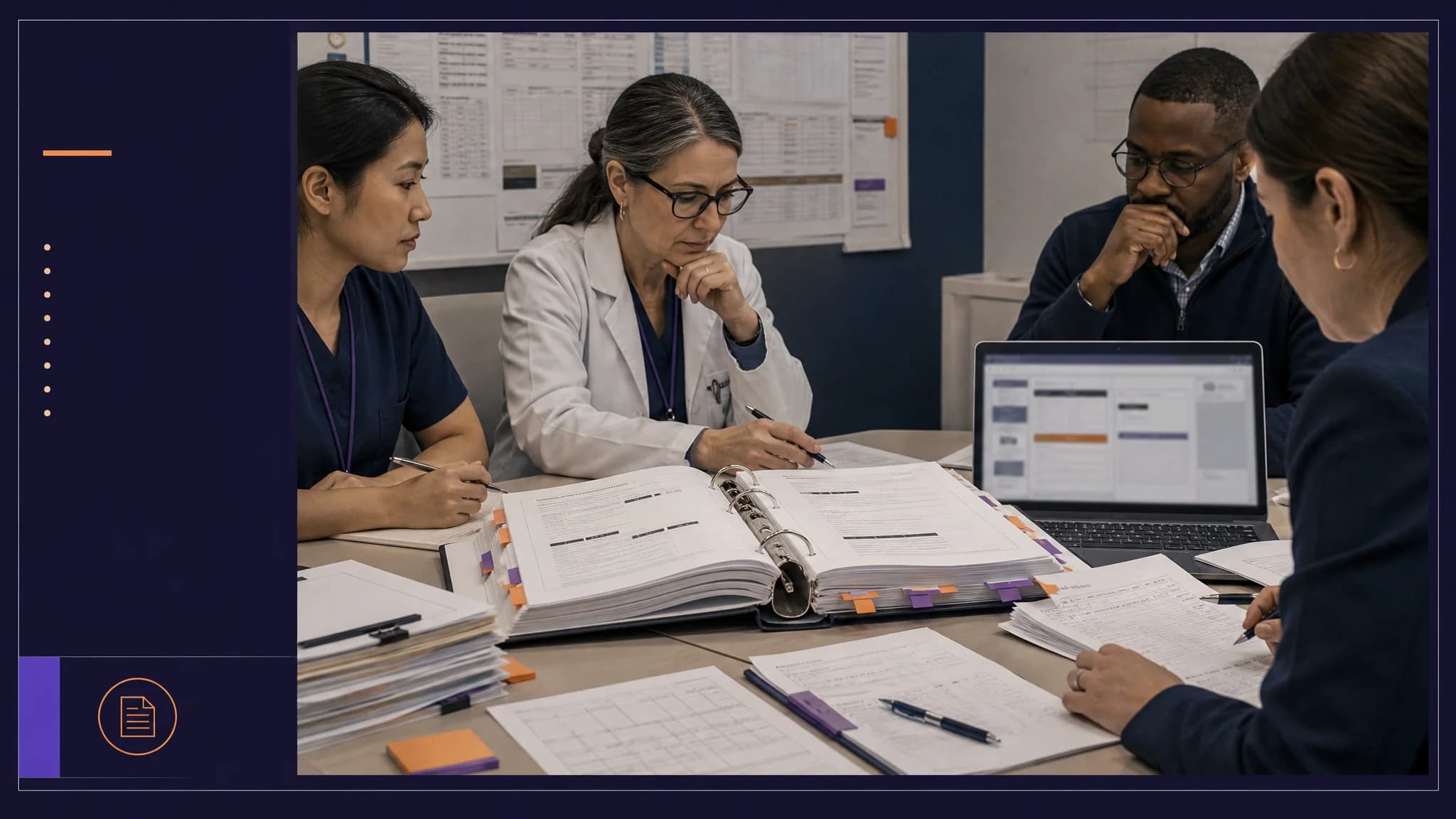
Protocol ingestion turns a trial protocol into evidence for adverse event grading. Upload the protocol, and the platform reads it into structured trial fields and indexes the full text for search. When a note on that trial is graded, it retrieves the protocol passages that bear on the event in the note.
The workflow merged on Friday 1 May, at the end of Week 18, and Week 19 made it something a prospective site could try: a passwordless demo sign-up, stricter types on protocol records, and a provider portal that works on a phone. Both mobile apps moved to one shared account deletion request the same week.
Why the protocol belongs in the grading context
A trial protocol says which adverse events are expected, which drugs make up the regimen, who is eligible and what the study sets out to learn. It is a long document, its key fields can end up re-entered by hand into other systems, and when an event is graded the protocol's own language is usually somewhere other than the grading screen.
With the protocol ingested, CTCAE grading reasons from the CTCAE criteria and from the protocol's own passages together, and the reviewer still makes the call.
What protocol ingestion extracts
The workflow parses the uploaded file, classifies its sections (summary, objectives, eligibility, treatment plan, safety monitoring, expected adverse events, schedule of events and others), extracts structured fields, then splits the full text into passages and indexes them for that organization and trial.
| Field | What it holds |
|---|---|
| Lay summary | The plain-language description of the study |
| Primary objective | The scientific objective as the protocol states it |
| Eligibility | Inclusion and exclusion criteria, as written |
| Treatment regimen | The regimen name and its drugs |
| Expected adverse events | The events the protocol lists as expected |
| Risks | Risks grouped by level: common, uncommon, rare, life-threatening |
| Benefits | Participation benefits the protocol names |
Every extraction carries a confidence score and waits as a draft. A review screen shows what was extracted, and a reviewer approves it into the trial's protocol fields or rejects it; either decision is written to the audit trail.
How protocol-aware CTCAE grading uses expected adverse events and drugs
When a note on a trial with an ingested protocol is graded, the knowledge step searches that trial's protocol before grading. Its searches include:
- Expected adverse events. It searches the expected adverse events section for the CTCAE terms found in the note.
- Each suspected drug. For up to three drugs the note names, it searches for the protocol's passages on that drug.
- A fallback. If the note names neither terms nor drugs, it runs one general search from the note itself.
Passages that clear a similarity threshold enter the grading context labelled with their document and section, alongside the CTCAE criteria. A search that fails is logged and the grade still runs without that passage. The protocol ingestion FAQ covers the same feature in question-and-answer form.
A passwordless demo sign-up
Seeing the platform used to start with account creation, a one-time passcode by email and organization setup. A demo deployment can now offer a passwordless sign-up instead: a visitor gives a name, email, phone number and organization name, and lands in their own new organization, already active. If the organization cannot be created under the name given, the flow retries with a generated identifier.
The same change tightened the types on protocol records, so the organization on a protocol is checked as an organization identifier at the API boundary.
The provider portal on a phone
Coordinators and clinicians do not always work at a desk. The home, encounters and patient pages of the provider portal had a mobile-first pass:
- Tables sit in scrollable containers sized to the screen, so wide tables stay readable on a phone.
- Header actions collapse into a single menu on small screens, keeping every action.
- Headers stack on phones, and spacing and padding scale with the screen.
Account deletion in both mobile apps
The patient and provider mobile apps now send account deletion through one shared request. In the provider app, the delete button shows progress and cannot be pressed twice, and the app signs out as soon as the deletion request succeeds. After sign-out, each app returns to its own starting screen. The patient app also lets a participant enter an enrollment token before signing in.
Also in Week 19
- Sign-in tested end to end. Sign-in and sign-up gained end-to-end browser tests in CI, and the test-only sign-in helpers moved into one module that is switched on only where a test code is configured.
- The Trials area under test. End-to-end smoke tests now cover the Trials routes, from the dashboard to safety, management and symptom management.
- One workflow pattern. The second web grading layout and its database-backed streaming path were removed, leaving one pattern in which grading runs on the server and saves its results.
- Translations consolidated. Each of the platform's seven languages moved from more than twenty separate files to one file, with no translation keys lost.
- Invitation expiry. Member invitation expiry now runs through a shared, unit-tested date utility.
What changed after Week 19
- Since September 2026, reading protocols for research sites is the job of Protocol Studio, a Burna AI product line. The place to start is a free protocol conformance report, which cites both passages for each contradiction it finds within a protocol's documents. CTCAE grading on app.burna.ai still searches an ingested trial protocol for the terms and drugs each note names.
- The demo address used for this sign-up is retired. In-browser product demos for a research site, a sponsor and a patient now run on burna.ai, and the way to see the platform on your own workflow is a conversation.
- Since July 2026, the provider web portal has been retired in favor of app.burna.ai.
- Since August 2026, the trial patient app is Healthnotes, the participant app sponsors deploy through sites, and the provider mobile app is CTCAE by Burna AI.
AI suggests, clinicians decide. Human-in-the-loop, always.
Book a 15-minute conversation to see protocol-aware grading on one of your own protocols.